Stitches help hold a wound closed while your body repairs the skin beneath the surface. Healing happens in stages, and each stage has normal changes as well as warning signs.
In this article, you will learn what to expect day by day, how to care for stitches at home, and when symptoms need medical attention.

How Stitches Help the Wound Healing Process
Stitches are used to bring wound edges together so the skin can heal in a more stable position. This is often called primary healing, which means the wound edges are closed instead of being left open to heal from the inside out. Stitches reduce tension on the wound and help protect the new tissue forming underneath. They do not heal the wound by themselves, but they create the right conditions for the body to repair tissue.
Healing time can vary depending on the wound’s location, depth, and cause. A small facial cut may heal faster than a wound over a knee, ankle, or other area that moves often. Age, nutrition, blood flow, diabetes, smoking, and infection risk can also affect the timeline. This is why stitch care should follow the provider’s instructions rather than a general timeline alone.
The Four Main Stages of Healing in Wound Care
The healing of wounds comes in four stages. The first stage is hemostasis, when the body stops bleeding by narrowing blood vessels and forming a clot. This starts right after the injury or procedure and usually happens within minutes.
After that comes inflammation, when immune cells clean the area and protect it from germs. During this stage, mild redness, swelling, warmth, and tenderness can be normal if they stay close to the wound and begin to improve.
The third stage is proliferation, when the body builds new tissue and collagen to strengthen the wound. The scar may look pink, red, raised, or firm during this stage, which can be expected as tissue rebuilds.
The final stage is maturation, when collagen reorganizes, and the scar slowly becomes flatter and stronger.
These stages help clinicians in wound care services judge whether healing is following the expected path or moving toward infection or delayed repair.
Stitches Healing Timeline: What to Expect Day by Day
| Timeline | What may happen | What to watch for |
| Day 0 | The wound is cleaned, closed with stitches, and usually covered with a dressing. Mild pressure, soreness, or light bleeding can happen after stitches are placed. | Keep the wound protected and follow the care instructions given after the procedure. Bleeding that does not slow down or soaks through the dressing should be checked. |
| Days 1 to 2 | Mild swelling, tightness, and redness close to the incision are common. Small amounts of clear or lightly pink drainage may also occur. | Pain should not keep increasing, and redness should not spread outward. Worsening pain, heavy drainage, or soaked dressings need medical attention. |
| Days 3 to 5 | Inflammation should start to settle, and the wound edges should remain closed. Itching may begin as new tissue forms beneath the skin. | Avoid scratching, picking, or pulling at the stitches. Watch for pus-like drainage, odor, spreading redness, or wound edges opening. |
| Days 6 to 10 | The incision may look drier and more stable, and bruising may begin to fade. Depending on the wound location and provider instructions, some stitches may be ready for removal. | Do not remove stitches on your own. If the wound is still painful, swollen, draining, or separating, it should be reassessed before removal. |
Stitch Removal: What Patients Should Know
Many non-dissolvable stitches are removed within 3 to 14 days, but the exact timing depends on the wound site and how much tension is on the skin. Stitches on the face are often removed sooner, while stitches over joints or high-movement areas may need longer support.
Dissolvable stitches do not require removal, but they still need monitoring while the wound closes. Removing stitches too early can allow the wound to reopen, while leaving them too long may increase irritation or scarring.
After stitches come out, the wound may look closed but still be fragile. The skin has not regained full strength, and deeper tissue may continue healing for weeks. Some wounds may need extra support with skin strips or a protective dressing after removal.
Activity should increase based on provider guidance, especially if the wound is near a joint, foot, abdomen, or area that stretches.
Normal Symptoms During Stitches Healing
Normal symptoms usually improve over time rather than become more intense. Mild redness close to the wound, slight swelling, tenderness, bruising, and small amounts of clear drainage can be part of early healing.
Itching and tightness are also common as the skin repairs itself, and the scar begins to form. These symptoms should stay limited and should not spread beyond the wound area.
A healing scar may look pink, red, raised, or firm during the first weeks. This does not always mean something is wrong, especially if pain is decreasing and the wound edges remain closed. The scar usually softens and fades, although some scars remain visible. Protecting the area from rubbing, stretching, and sun exposure helps reduce irritation during scar development.
Warning Signs That Stitches May Be Infected
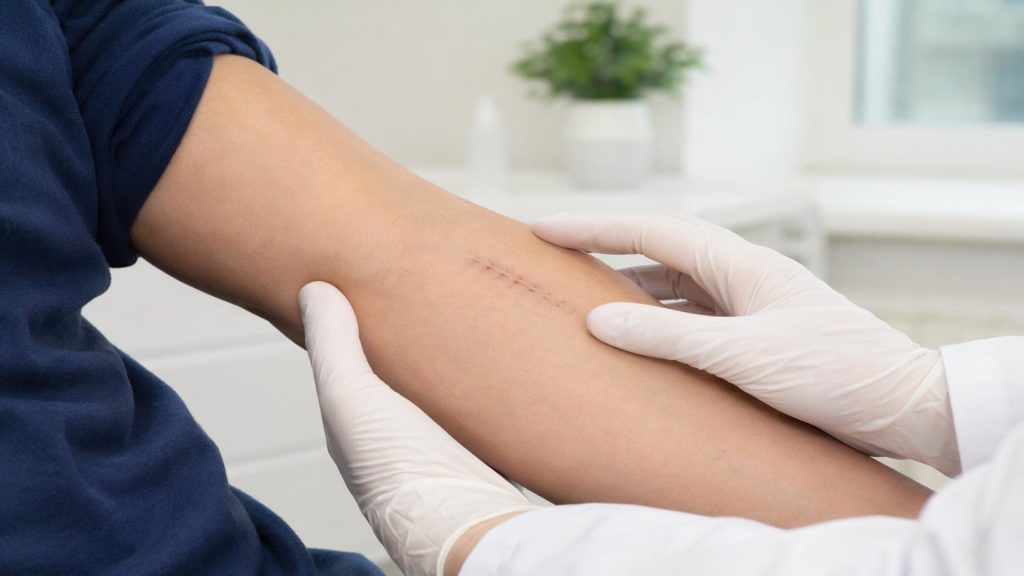
Warning signs of infection include redness that spreads, increasing warmth, swelling that grows, and pain that gets worse instead of better. Drainage that becomes thick, cloudy, yellow, green, gray, or foul-smelling is also concerning.
A wound that opens, bleeds more, or has stitches pulling through the skin needs evaluation. These signs matter because infection can move into deeper tissue if care is delayed.
Whole-body symptoms are more urgent. Fever, chills, swollen glands, red streaks near the wound, confusion, or feeling very unwell can suggest that the infection is spreading. People with diabetes, poor circulation, immune suppression, or fragile skin should seek help sooner because wounds can worsen with fewer early symptoms. A worsening wound should not be managed by home care alone.
How to Care for Stitches at Home
Caring for stitches is fairly easy. Wash your hands before touching the wound or changing a dressing. Clean the area only as directed, and avoid scrubbing, picking at the crust, or pulling on stitches. Keep the dressing clean and dry, and replace it if it becomes wet, dirty, or loose. Protect the wound from pets, dirt, tight clothing, and any surface that could introduce bacteria.
Do not use hydrogen peroxide, rubbing alcohol, or iodine on an open stitched wound unless a clinician tells you to use them. These products can damage healthy cells that are trying to rebuild tissue.
Avoid soaking, swimming, heavy lifting, stretching, or contact sports until the wound is cleared for those activities. Following activity limits is important because tension can pull the wound edges apart before the skin is strong enough.
Factors That Can Slow Stitches’ Healing
Some wounds take longer to heal because the body has fewer resources to repair tissue. Diabetes, poor circulation, dehydration, poor nutrition, smoking, and infection can all slow progress.
Certain medications, such as steroids or blood thinners, may also affect healing or bleeding risk. If these factors are present, closer monitoring can help catch problems before they become serious.
Wound location also matters. Stitches over joints, feet, hands, or areas under pressure face more movement and friction. Older adults may also have thinner skin that tears more easily when tape or dressings are removed.
When healing is slow, the care plan may need adjustment instead of repeated use of the same routine.
Scar Care After Stitches Heal
Scar care usually begins only after the wound is fully closed and a clinician says it is safe. The new skin is delicate, so avoiding scratching, rubbing, and sun exposure is important. Sunlight can darken a healing scar and make color changes more noticeable. Covering the scar or using sun protection after closure can help protect the new tissue.
Some people ask about silicone sheets, gels, or scar massage, but these should be used only when the wound is closed, and no signs of infection are present. Scar maturation can continue for months, and some scars keep changing for a year or longer.
A scar that becomes painful, very raised, or repeatedly irritated may need professional review. Scar care is most effective when it starts at the right time and does not disrupt healing tissue.
What to Remember About Stitches Healing
Stitch healing follows a predictable pattern: bleeding control, inflammation, tissue rebuilding, and scar maturation. Mild redness, swelling, tenderness, itching, and a pink or raised scar can be normal when symptoms improve over time. Warning signs include spreading redness, worsening pain, pus-like drainage, foul odor, fever, red streaking, or wound reopening. Proper cleaning, dressing protection, scheduled stitch removal, and early medical attention help reduce infection risk and support stronger healing.
In Ohio, we at Inspiring Minds Wound Care offer mobile wound care support when receiving treatment at home is appropriate for the patient’s care plan. Our approach centers on careful clinical assessment, infection prevention, and practical guidance for both patients and caregivers.