Diabetic foot ulcers are among the most serious complications of diabetes, and they rarely heal as quickly as ordinary wounds. Most take between 6 and 20 weeks to close, with some requiring additional time based on the wound’s depth and overall health.
In this article, you will learn what drives healing timelines, what recovery stages to expect, and when professional care becomes essential.
Why Diabetic Foot Ulcers Heal Slowly
Diabetes affects the body in ways that make wound healing more difficult at every stage, which is why diabetic foot ulcers require a different level of attention than most other wounds. High blood sugar damages small blood vessels and nerves throughout the body over time, and both of these systems play a central role in the tissue repair process.
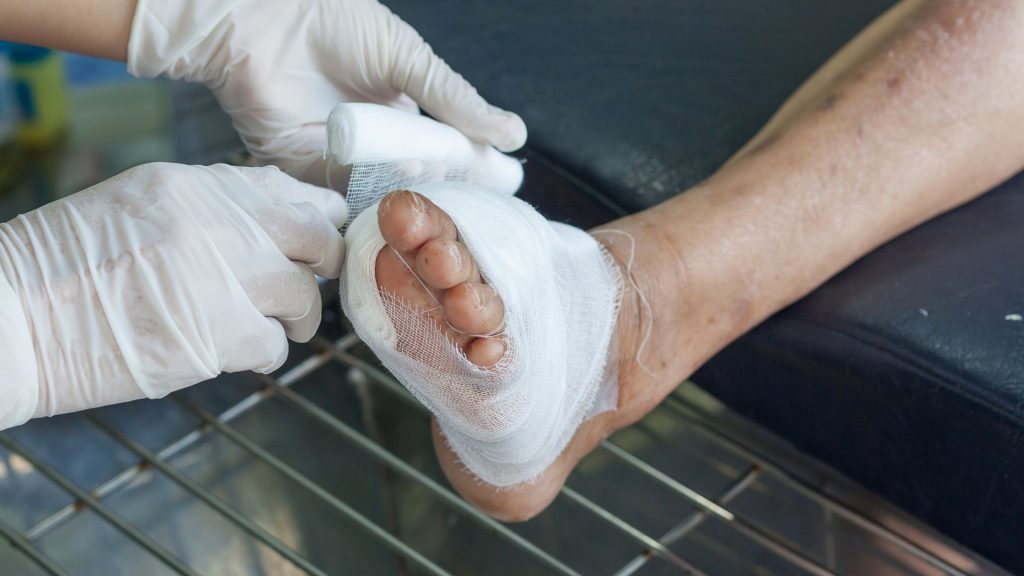
When blood vessels are compromised, the wound receives less oxygen and fewer of the nutrients it needs to rebuild damaged tissue. This is why professional wound care services place such a strong emphasis on blood sugar management as a core part of every diabetic wound treatment plan.
The Role of Neuropathy and Circulation in Delayed Healing
Diabetic neuropathy, the nerve damage caused by prolonged high blood sugar, creates another significant layer of risk by reducing sensation in the feet. Because feeling is diminished, small wounds, blisters, or pressure points can go unnoticed for days or even weeks before treatment begins, allowing the injury to worsen without any pain to serve as a warning.
Poor circulation, known medically as peripheral artery disease, compounds the problem by limiting blood flow to the lower limbs and reducing the wound’s access to the immune cells and growth factors responsible for tissue repair. These three conditions, high blood sugar, neuropathy, and poor circulation, often work together to create an environment where even a minor foot wound becomes a prolonged healing challenge.
Healing Timelines by Severity: The Wagner Classification System
The depth and severity of a diabetic foot ulcer have the most direct influence on how long the healing process will take, and healthcare providers use the Wagner Classification System to grade ulcers from 0 to 5 based on tissue involvement.
A Grade 0 wound describes high-risk skin with calluses, blisters, or redness but no open break in the surface, and these cases typically resolve within days to two weeks with proper attention and preventive foot care. Understanding where a wound falls on this scale gives both patients and care providers a reliable framework for setting realistic expectations about recovery.
Grade 1: Superficial Ulcer
A Grade 1 ulcer is a shallow open sore that does not extend through the full thickness of the skin, and it generally takes 6 to 8 weeks to heal under a consistent treatment plan. At this stage, the wound responds well to appropriate dressings, offloading, and blood sugar management, making early intervention the most important factor in achieving a timely recovery.
Grade 2: Deep Ulcer Without Bone Involvement
A Grade 2 ulcer extends deeper into the foot, reaching tendons, ligaments, or joint capsules, though it does not yet involve the bone. The expected healing window at this stage extends to 12 to 16 weeks, and the increased depth of the wound makes consistent clinical monitoring a necessary part of preventing the infection from progressing further into surrounding tissue.
Grade 3: Deep Ulcer With Bone Involvement or Abscess
A Grade 3 ulcer involves either bone infection, known as osteomyelitis, or a deep abscess that has developed within the wound. These wounds typically require 16 to 20 or more weeks of treatment before meaningful closure begins, and systemic antibiotics, surgical debridement, and close clinical oversight become essential components of care at this level rather than supplementary options.
Grade 4: Partial Gangrene
Grade 4 marks the point at which tissue death, or gangrene, has taken hold in a localized area of the foot, such as a single toe or a portion of the forefoot. Surgical intervention is frequently required to remove the affected tissue, and the healing timeline extends well beyond what earlier-stage ulcers require, with outcomes depending heavily on the patient’s circulation and overall health status.
Grade 5: Extensive Gangrene of the Entire Foot
Grade 5 represents the most severe presentation in the Wagner system, involving gangrene that has spread across the entire foot. Cases at this level almost always require surgical intervention, and amputation is a frequent outcome when circulation cannot be restored and tissue death cannot be contained. All healing timelines across every grade in this system assume that blood sugar levels are being managed and that the patient is following a consistent care plan under professional supervision.
The Three Stages of Diabetic Foot Ulcer Healing
Diabetic foot ulcers move through three distinct phases during recovery, and understanding what takes place in each stage helps patients and caregivers know what to expect at every point in the process.
Stage 1
The first phase, known as the inflammation and debridement phase, occurs during weeks one and two, when the immune system begins responding to the wound and a healthcare provider removes dead or damaged tissue to expose the healthy tissue underneath. This process, called debridement, may cause the wound to appear larger or deeper than it did before treatment started, which is a normal and necessary part of preparing the wound bed for new tissue growth.
Recognizing this as a sign of progress rather than deterioration helps patients remain committed to the treatment plan during what can be a discouraging early period.
Stage 2
The second phase, granulation tissue formation, spans roughly weeks three through six and is marked by the growth of new pink or red tissue rising from the base of the wound. This tissue is dense with blood vessels and signals that the body is building the cellular foundation needed for new skin, while the wound gradually begins to contract from its edges.
Stage 3
The third and final phase, re-epithelialization, begins around week six and continues until the outer layer of skin has grown fully across the wound surface and closed the opening. The length of this final stage varies considerably depending on the ulcer’s original grade, the patient’s circulatory health, and how consistently the full treatment plan has been followed throughout recovery.
Key Factors That Affect Healing Speed
Several variables determine whether a diabetic foot ulcer heals within the shorter or longer end of the expected window, and some of these factors are within the patient’s direct control.
Blood sugar management is among the most influential, as maintaining an HbA1c level below 7% supports immune cell function, promotes healthy circulation, and creates a wound environment that is more responsive to treatment interventions.
Infection is another major factor, because a wound that has become infected cannot move through the normal healing stages until the bacterial load is brought under control, which often requires a course of systemic antibiotics before meaningful tissue repair can begin. Patients who smoke face additional obstacles, since nicotine constricts blood vessels and reduces the flow of oxygen to tissue that is already struggling to receive adequate circulation.
Offloading, the practice of removing sustained pressure from the ulcer site, is one of the most critical and frequently underestimated components of diabetic foot ulcer care. Walking on an unprotected foot ulcer disrupts the fragile granulation tissue that forms during the second healing phase and can prevent the wound from closing regardless of how well other aspects of care are managed.
Special footwear, padded braces, total-contact casts, or mobility aids such as wheelchairs and crutches are all used to reduce mechanical stress on the wound site throughout the healing period.
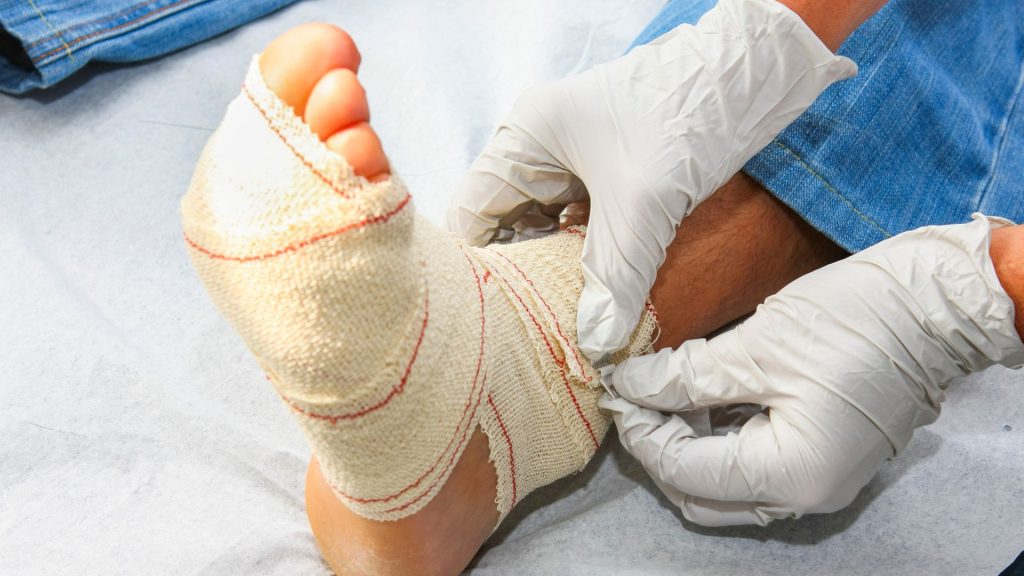
Consistent adherence to scheduled dressing changes and clinical follow-up appointments allows the care team to catch complications at an early stage and adjust the treatment plan before setbacks have a chance to lengthen recovery.
Treatment Approaches That Support Faster Healing
Managing a diabetic foot ulcer requires a structured approach that addresses the wound itself, the surrounding tissue, and the underlying health factors that slow healing. Debridement is typically one of the first and most important treatment steps, involving the removal of dead or infected tissue through surgical cutting, enzymatic solutions, or whirlpool-assisted methods, all of which expose a clean wound bed that is ready to begin the repair process.
Appropriate wound dressings are selected based on the level of drainage the wound produces, ranging from moisture-balanced dressings for moderately draining wounds to medicated or skin-substitute options for more complex presentations. Managing blood sugar, blood pressure, and cholesterol through medication forms a critical part of the treatment framework, since systemic health has a direct bearing on how well the wound responds to every other form of care.
Advanced Therapies for Complex or Non-Healing Ulcers
When standard wound care is not producing the expected progress, advanced therapies can provide the additional support a non-healing ulcer requires. These include:
- Hyperbaric oxygen therapy (HBOT): Delivers high concentrations of oxygen to oxygen-deprived tissue, accelerating cellular repair in wounds where poor circulation is a primary obstacle
- Negative pressure wound therapy (NPWT): Uses controlled suction to remove excess fluid from the wound bed and stimulate the growth of healthy granulation tissue
- Growth factor therapy: Applies bioengineered proteins to the wound surface to promote cellular activity and support tissue regeneration in wounds that have stalled
- Vascular surgery: Restores blood flow to the lower limbs in patients with severe peripheral artery disease, which is often a prerequisite for meaningful wound healing in advanced cases
Each of these therapies is typically introduced when a wound is not responding to foundational treatment, and the decision to pursue them is made in close collaboration between the patient and their wound care team.
Warning Signs and Complications to Watch For
Monitoring a diabetic foot ulcer for changes between clinical visits is an important part of keeping the healing process from being derailed by complications. Signs of active infection to watch for include increasing redness or warmth around the wound, swelling that grows rather than subsides, additional drainage, the presence of pus, an unpleasant odor, fever, or chills.
Any of these signs indicates that bacteria have taken hold in the wound and that professional evaluation is needed before the infection spreads to deeper tissue or bone. A wound that probes to bone or produces deep pain in the surrounding area raises concern for osteomyelitis, a bone infection that requires intensive antibiotic treatment and sometimes surgical management.
Systemic Complications That Require Immediate Medical Attention
Some complications of diabetic foot ulcers extend beyond the wound site and affect the body as a whole, making early recognition a genuine priority.
Gangrene, marked by skin that darkens to brown or black and may carry a foul odor, signals that tissue death has occurred and that surgical treatment, potentially including amputation, may be required to prevent the spread of necrosis.
Sepsis, a life-threatening systemic response to infection entering the bloodstream, can develop from an untreated diabetic foot ulcer and presents with fever, rapid heart rate, confusion, or sudden fatigue alongside the wound.
Patients who have healed from a diabetic foot ulcer also face a recurrence rate of more than 70 percent within five years, which makes ongoing monitoring and preventive foot care a permanent part of managing life with diabetes.
Prevention: Reducing the Risk of Future Ulcers
Preventing a diabetic foot ulcer from developing, or from recurring after one has healed, requires consistent attention to foot health as a regular part of daily life.
Daily foot inspections are among the simplest and most effective preventive measures available, giving patients the opportunity to catch blisters, cuts, redness, or texture changes before they develop into open wounds that require clinical treatment.
Barrier repair creams containing ceramides and urea help maintain the skin’s protective surface, particularly at the heels where cracking is most common and where an unnoticed break in the skin can serve as an entry point for infection.
Lifestyle, Footwear, and Professional Monitoring
Wearing properly fitted, closed-toe shoes with adjustable closures protects the feet from friction and pressure points that can injure skin without the patient ever sensing the damage.
Smoking cessation is a meaningful preventive step, since quitting nicotine improves blood vessel function and restores better tissue oxygenation over an extended period of time. Regular professional foot exams, which include sensitivity testing using a monofilament and assessments of foot pulse strength, provide an objective measure of nerve and circulation health that self-monitoring cannot replicate.
Keeping HbA1c levels below 7% through a combination of medication, diet, and physical activity remains the single most protective long-term measure against both the development and recurrence of diabetic foot ulcers.
Managing Diabetic Foot Ulcers With Knowledge and the Right Support
The healing timeline for a diabetic foot ulcer ranges from a few weeks for a shallow surface wound to several months for a deep, infected, or circulation-compromised case, and navigating that process well requires both informed self-care and consistent professional oversight. Understanding the Wagner grades, recognizing the stages of healing, monitoring for warning signs, and protecting the foot from pressure and further injury all give patients and caregivers a real advantage in supporting recovery.
For those managing chronic or complex diabetic foot wounds, connecting with a dedicated wound care team such as ours at Inspiring Minds Wound Care provides access to advanced therapies and clinical expertise that standard home care cannot offer. Taking a proactive approach to diabetic foot health, from daily inspections to long-term blood sugar control, is the most reliable path to protecting both the wound and the overall quality of life that depends on healthy, functional feet.