Some wounds are too complex to heal with a standard dressing alone. When a wound is deep, slow to close, or producing large amounts of fluid, a more advanced approach is often needed. Negative pressure wound therapy is one of the most effective tools available for these situations.
In this article, we explain how it works, what conditions it treats, and what patients can expect during treatment.
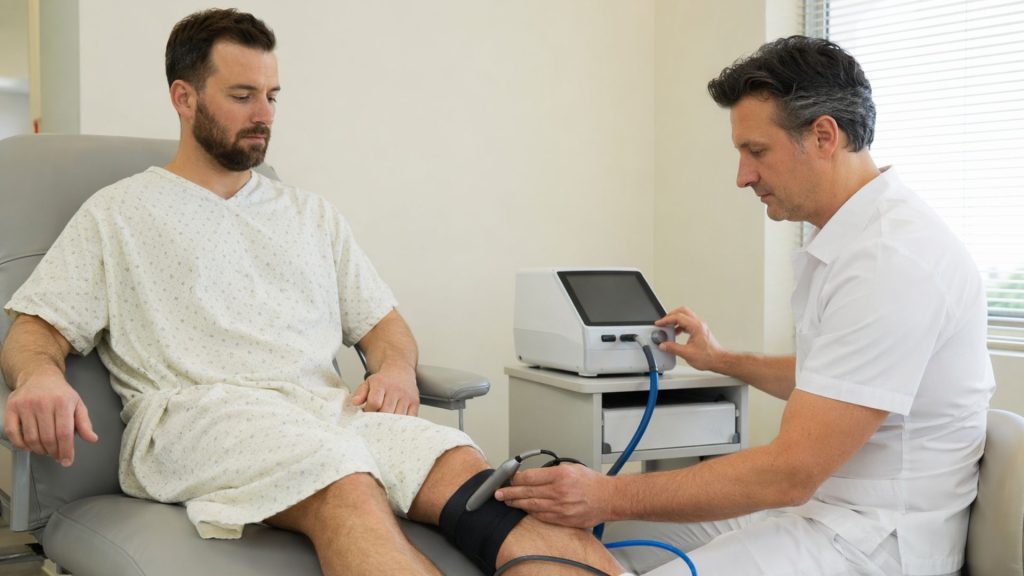
What Is Negative Pressure Wound Therapy?
Negative pressure wound therapy (NPWT), also referred to as vacuum-assisted closure or VAC therapy, is an advanced wound care technique that uses controlled suction to support and accelerate the healing process. Rather than simply covering a wound, NPWT actively changes the wound environment by applying steady, below-atmospheric pressure directly to the wound surface.
This approach was formally described and standardized in 1997 and has since become a well-established option in clinical wound management. Unlike conventional dressings, which are passive barriers, NPWT works by drawing wound edges closer together, removing excess fluid, and stimulating the growth of new tissue at a biological level.
Understanding what NPWT involves helps explain why it is recommended for certain wounds that have not responded to standard treatment, particularly in home wound care services. It is an option reserved for wounds that need more than moisture management and protection, and it is always administered and monitored by trained wound care professionals.
How the NPWT System Works
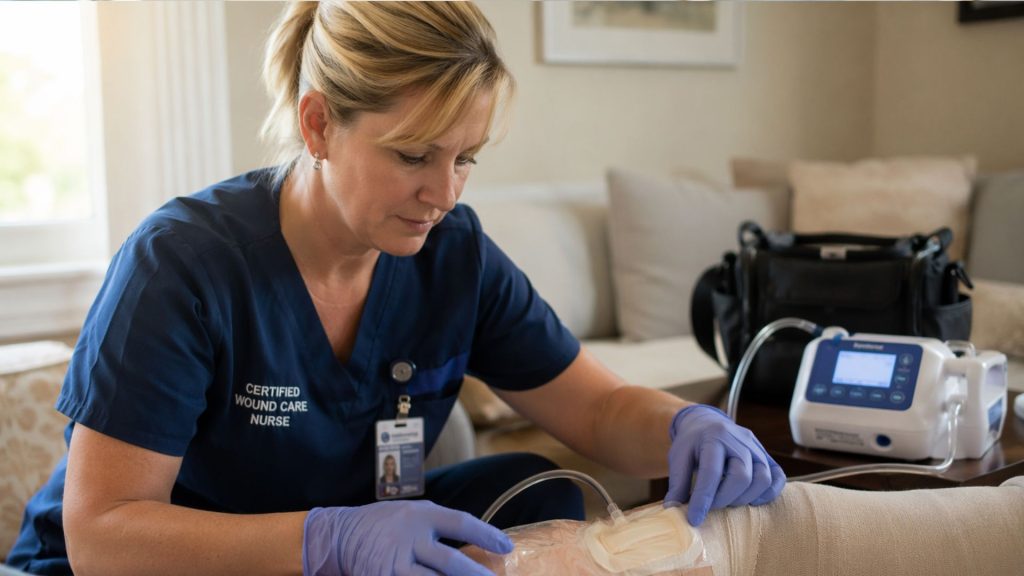
The NPWT system is made up of four key components that work together to create and maintain a controlled healing environment. Each part plays a specific role in applying and sustaining the negative pressure that drives the healing process.
- Wound Dressing Interface: A porous foam dressing cut to fit the exact shape and size of the wound. Polyurethane foam, which appears black, is used for wounds producing heavy drainage, while polyvinyl alcohol foam, which appears white, is used when more precise control of new tissue growth is needed.
- Occlusive Adhesive Film: A transparent, adhesive covering applied over the foam dressing to create an airtight seal over the wound, which is necessary for the suction to function as intended.
- Drainage Tubing: A length of tubing that runs from beneath the adhesive film to a collection canister, carrying wound fluid away from the wound surface throughout the treatment period.
- Portable Vacuum Pump: The device that powers the entire system by applying continuous or intermittent suction at pressures typically ranging from -55 to -175 mm Hg, depending on the wound’s condition and the treatment goals established by the care team.
The Biological Mechanisms Behind NPWT
NPWT promotes healing through a combination of mechanical and biological processes that operate at both a large and a microscopic scale.
At the larger scale, the suction pulls the wound edges physically inward toward the center of the wound, a process known as macrodeformation. This centripetal force can reduce the wound’s surface area by as much as 18 to 35 percent within just 72 hours of application, and total wound area reduction of approximately 80 percent has been documented over the course of treatment.
At the microscopic level, the porous texture of the foam creates tiny areas of mechanical stress across the wound bed, a process called microdeformation or mechanotransduction. This microscale stimulation activates cellular signaling pathways that trigger the growth and movement of new cells along with the production of collagen, which is essential for new tissue formation.
NPWT also promotes angiogenesis, the formation of new blood vessels, by stimulating growth factors that can increase new granulation tissue by approximately 63 percent. At the same time, it shifts the wound environment away from chronic inflammation by reducing pro-inflammatory compounds and encouraging the cellular conditions associated with active repair.
What Types of Wounds Is NPWT Used For?
NPWT is designed for wounds that are too complex, too deep, or too slow-healing to respond to conventional wound dressings. It is used across a range of wound categories, from acute traumatic injuries to long-standing chronic wounds that have failed to progress despite standard care. The common thread across all suitable wound types is that the wound environment needs active intervention rather than passive protection.
| Wound Type | Key Characteristic |
| Diabetic foot ulcers | Have not responded to standard dressing therapy |
| Venous leg ulcers | Producing high volumes of exudate |
| Pressure injuries | Common in patients with limited mobility |
| Dehisced surgical wounds | Have reopened following a surgical procedure |
| Traumatic wounds | Include open fractures and large lacerations |
| Post-contamination or necrotizing infection wounds | Require ongoing drainage and close monitoring |
| Skin grafts and flaps | NPWT applied as a bolster to secure the graft against underlying tissue |
| Large wounds | Require accelerated closure before definitive surgical repair |
When a wound has not shown measurable improvement after several weeks of conventional care, NPWT is often the next step that wound care specialists consider as part of a revised treatment plan.
When NPWT Is Not Appropriate: Contraindications to Know
While NPWT is a valuable tool, it is not suitable for every wound, and careful patient screening is essential before the therapy is applied.
Wounds that contain necrotic or devitalized tissue cannot be treated with NPWT until that tissue has been removed through debridement, because the suction cannot support healing in an environment where non-viable tissue is present. Similarly, wounds with untreated active infection or underlying bone infection (osteomyelitis) must be addressed before NPWT begins.
There are additional situations in which NPWT should not be used, and a wound care specialist will evaluate each patient’s circumstances carefully before recommending it. Wounds where blood vessels, organs, or nerves are exposed carry a serious risk if negative pressure is applied directly over them.
Patients who are at high risk for bleeding, those with malignant tissue within the wound, those with an allergy to adhesive dressings, and those whose wounds are positioned near joints that could reopen with movement are all candidates for whom NPWT would need to be approached with significant caution or avoided altogether.
Risks and Potential Complications of NPWT
Like any advanced medical treatment, NPWT carries risks that are important to understand before therapy begins. While the therapy has a strong clinical track record, being aware of its potential complications helps patients and caregivers ask the right questions and know what to watch for during treatment. These risks are manageable when the therapy is overseen by trained wound care professionals who monitor the wound and the system throughout the treatment period.
The following are the most commonly recognized risks and complications associated with NPWT:
- Bleeding: The most serious potential complication, particularly when suction is applied near major blood vessels. Careful wound assessment before and during treatment is essential to managing this risk.
- Foam Retention: Small pieces of the foam dressing can be inadvertently left inside the wound during dressing changes, increasing the risk of infection if not identified and removed.
- Mechanical Failure: Loss of suction can occur due to a poor adhesive seal, blocked drainage tubing, or a full collection canister, all of which interrupt the therapy and require prompt attention.
- Skin Maceration or Erosion: The surrounding skin can break down if the adhesive film is not positioned and maintained with care during each dressing change.
- Pain During Dressing Changes: Discomfort is a commonly reported experience, and since dressing changes occur every 24 to 72 hours, managing pain is a practical and ongoing part of the treatment process.
A wound care specialist will work closely with the patient to monitor for these complications, address discomfort, and make adjustments to the treatment plan as the wound’s condition evolves.
Advanced Wound Care in Ohio for Complex and Non-Healing Wounds
For patients in Ohio who require advanced wound therapies, including NPWT, wound care brought directly to patients makes it possible to receive this level of clinical oversight without the burden of frequent clinic travel. Wound care specialists can assess, apply, and monitor NPWT as part of a broader individualized care plan delivered directly to the patient, whether at home or in a supported care setting.
We at Inspiring Minds Wound Care provide patients across Ohio with access to certified wound care specialists who provide advanced, evidence-based treatment for complex and non-healing wounds, including access to advanced wound care therapies for wounds that require clinical-level intervention beyond standard dressing care. This model of care is particularly meaningful for patients managing diabetic foot ulcers, pressure injuries, and post-surgical wounds who need consistent professional attention throughout the treatment process. We combine clinical expertise with personalized treatment and convenient mobile services, which allows us to help patients receive the ongoing care needed to support healing and improve long-term outcomes.