A second-degree burn can cause pain, blisters, swelling, and skin damage that needs careful attention. Proper care helps protect the wound, reduce infection risk, and support healing.
In this article, you will learn how to recognize a second-degree burn, provide immediate first aid, care for the wound, and understand when medical treatment is needed.
What Is a Second-Degree Burn?
A second-degree burn, also called a partial-thickness burn, damages the outer layer of skin and part of the layer beneath it. These burns often look bright red, moist, or shiny. They may cause blisters, swelling, tenderness, and significant pain because the deeper skin layer contains many nerve endings.
Second-degree burns are more serious than mild surface burns, which usually cause redness without blisters. A deeper burn may appear pale, very dry, leathery, or charred, and it may cause less pain if nerves have been damaged. Because burn depth is not always easy to judge, a healthcare professional should assess any burn that looks deep, covers a large area, or affects a sensitive part of the body.
For burns that need more than basic first aid, professional wound care services can provide ongoing assessment and treatment support. Professional care may include selecting appropriate dressings, monitoring healing, checking for signs of infection, and helping patients protect the injured area during recovery.
Early evaluation is especially important when the wound is painful, slow to improve, or located where scarring could affect movement or daily function.
Start With Immediate First Aid and Burn Wound Care
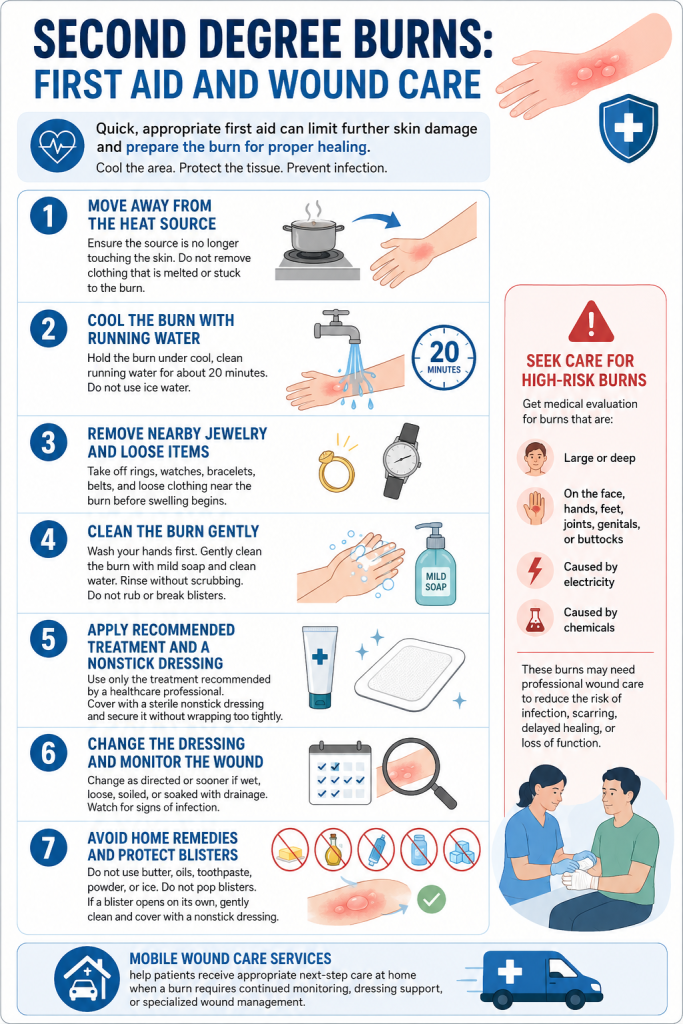
Quick, appropriate first aid can limit further skin damage and prepare a second-degree burn for proper treatment. The goal is to cool the area, protect fragile tissue, and avoid actions that can trap heat or introduce bacteria. Once the burn has been cooled and protected, careful cleaning and dressing changes can support healing and reduce the risk of infection.
Move Away From the Heat Source
Make sure the source of the burn is no longer in contact with the skin. If clothing is smoldering, follow fire-safety procedures and seek emergency help when needed. Do not attempt to remove clothing that has melted onto or become stuck to the wound, because pulling it away can cause further tissue damage.
Cool the Burn With Running Water
Hold the burned area under cool, clean running water for about 20 minutes when possible. Use cool water rather than ice water, since ice can damage burned skin and worsen the injury. Cooling the burn soon after it occurs helps stop heat from continuing to harm the deeper layers of skin.
Remove Nearby Jewelry and Loose Items
Take off rings, watches, bracelets, belts, and loose clothing near the burned area before swelling begins. Swelling can happen quickly after a burn and may make these items difficult to remove. Removing them early also helps prevent pressure on the injured area and supports healthy circulation.
Clean the Burn Gently
Once a clinician has determined that the burn can be managed at home, wash your hands before touching the wound or preparing a dressing. Gently clean the burn with mild soap and clean water, then rinse without scrubbing. Rubbing can remove healing tissue, irritate exposed skin, and break open blisters.
Apply Recommended Treatment and a Nonstick Dressing
Use only the ointment, cream, or topical treatment recommended by a healthcare professional. Cover the burn with a sterile nonstick dressing to protect it from friction, dirt, and bacteria. Secure the dressing without wrapping it too tightly, since pressure can increase pain and restrict circulation as swelling develops.
Change the Dressing and Monitor the Wound
Change the dressing according to the care plan or sooner if it becomes wet, loose, soiled, or soaked with drainage. A clean dressing supports a healthier healing environment and makes it easier to notice changes in the wound. Contact a healthcare professional if redness, warmth, swelling, pain, drainage, or odor becomes worse, since these changes may indicate infection or delayed healing.
Avoid Home Remedies and Protect Blisters
Do not apply butter, oils, toothpaste, powder, or ice to a burn. These materials can retain heat, irritate damaged skin, or make it harder for a clinician to assess and treat the wound. Do not pop blisters, because blisters can help protect the damaged tissue underneath; if one opens on its own, gently clean the area and cover it with a nonstick dressing.
Seek Care for High-Risk Burns
Medical evaluation is important for burns that are large, deep, located on the face, hands, feet, joints, genitals, or buttocks, or caused by electricity or chemicals. These burns may need professional wound care services to reduce the risk of infection, scarring, delayed healing, or loss of function.
When Should You Seek Medical Care for a Second-Degree Burn?
A second-degree burn should receive medical attention when it is larger than the injured person’s hand.
| Burn Situation | Why Medical Care Is Important |
| The burn is larger than the person’s hand | Larger burns can cause more tissue damage, fluid loss, and a greater risk of infection. |
| The burn affects the face, hands, feet, joints, genitals, or buttocks | Burns in these areas can interfere with movement, sensation, daily activities, or normal healing. |
| The burn circles a finger, arm, leg, or chest | Swelling may place pressure on nearby tissue and affect blood flow. |
| The burn was caused by electricity, chemicals, smoke, or an explosion | The injury may be deeper or more extensive than it appears on the skin. |
| The person has diabetes, poor circulation, reduced sensation, or a weakened immune system | These health factors can slow healing and increase the chance of serious infection. |
| The wound looks white, charred, leathery, numb, or unusually deep | These signs may indicate a deeper burn that needs urgent evaluation. |
| Pain, redness, drainage, or swelling becomes worse | Worsening symptoms can signal infection or delayed healing. |
Certain people face higher risks after a burn, including young children, older adults, and people with diabetes, poor circulation, weakened immunity, or reduced sensation. Burns caused by chemicals, electricity, smoke exposure, or explosions also need urgent assessment because the damage may extend beneath the skin.
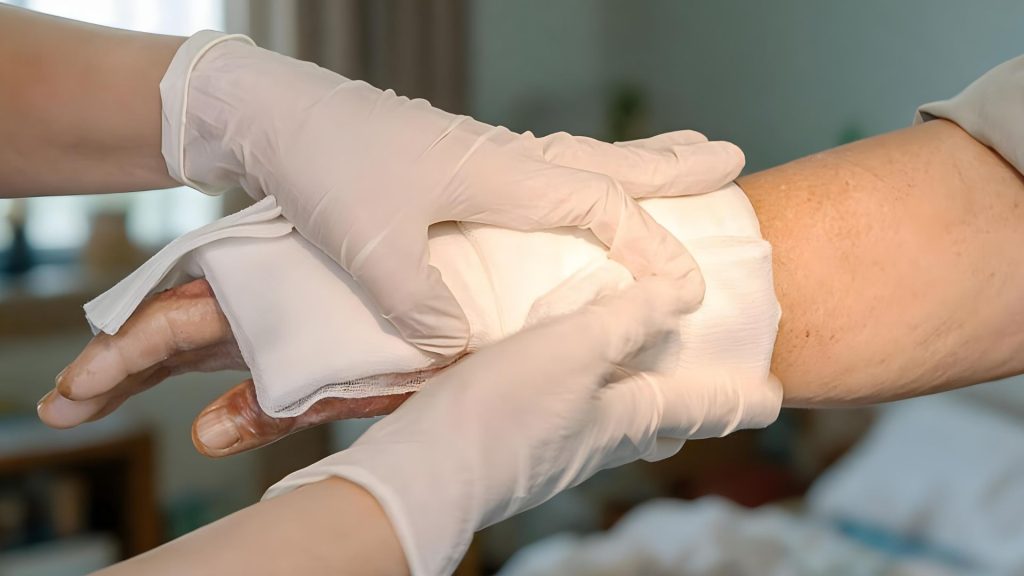
Seek emergency care for breathing problems, burns involving the mouth or airway, fainting, confusion, or burns that cover a large part of the body.
Mobile wound care services help patients receive appropriate next-step care at home when a burn requires continued monitoring, dressing support, or specialized wound management.
Should You Pop Burn Blisters?
You should not intentionally pop burn blisters at home. Blisters create a protective layer over damaged skin, which can reduce exposure to germs and limit irritation. Popping or peeling a blister may increase the risk of infection and create a larger open wound.
A healthcare professional may decide that a blister needs to be drained or removed under clean conditions, especially if it is large, painful, or likely to break. If a blister opens on its own, wash the area gently and cover it with a nonstick dressing. Avoid pulling loose skin away unless a clinician instructs you to do so, because that skin may still protect the healing area.
Managing Pain and Supporting Healing
Pain from a second-degree burn can make daily tasks difficult, especially during the first few days. Over-the-counter pain medicine may help when used according to the label and a clinician’s guidance. Elevating a burned arm, hand, leg, or foot can also reduce swelling, which may ease discomfort and protect movement.
Healing skin needs protection from rubbing, pressure, and sunlight. Wear loose clothing around the burn when possible, and avoid activities that may scrape or reopen the wound. Once the skin has fully closed and stopped draining, a fragrance-free moisturizer and sun protection may help reduce dryness and skin discoloration, but these products should be used only when the wound is no longer open.
Watch for Signs of Infection or Delayed Healing
A healing burn should gradually become less painful, less swollen, and less open over time. Contact a healthcare professional if pain increases instead of improving or if redness spreads beyond the burned area. New warmth, swelling, foul odor, pus, or heavy drainage can also indicate that the wound is infected and needs medical attention.
Other warning signs include fever, red streaks near the burn, or a wound that becomes larger, deeper, or shinier. A second-degree burn that does not show steady improvement may require a different dressing plan or further treatment. Prompt evaluation helps address infection or delayed healing before the wound becomes more difficult to manage.
Professional Wound Care Can Help With Complex Burns
Some burns need more than basic home care, especially when they are deep, slow to heal, infected, or affected by an underlying health condition. A professional home wound care plan can include regular assessment, appropriate dressings, pain management support, and monitoring for complications. In some cases, damaged tissue may need specialized treatment to help the wound heal properly.
At Inspiring Minds Wound Care, we help patients receive appropriate next-step care at home when ongoing wound support is needed. Our care team can assess the condition of the burn, guide dressing changes, monitor healing progress, and help address concerns before they develop into more serious complications. With consistent professional support, patients can better protect fragile healing skin and follow a care plan that fits their needs.